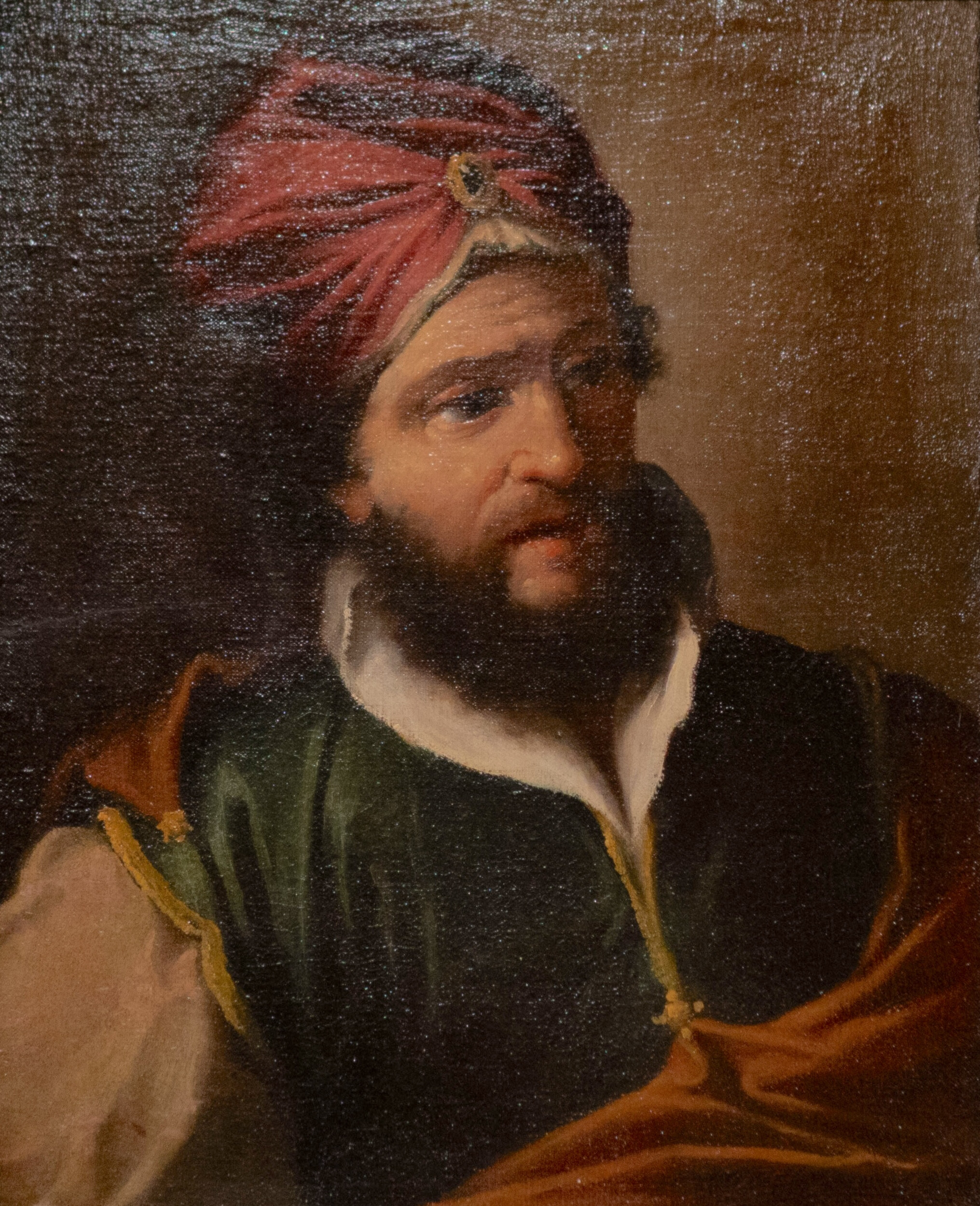

Questa tela, inserita in una cornice dellʼepoca, è un tipico esempio delle “teste di carattere” realizzate da Girolamo Negri: studi fisionomici a mezzo busto, destinati al collezionismo privato, di cui spesso non si conoscono né la committenza né la storia collezionistica.
Il soggetto raffigura un uomo barbuto in abbigliamento esotico, dominato da un turbante rosso vermiglio decorato al centro con una pietra incastonata in una montatura dorata.
La pennellata, più corposa rispetto ad altre opere simili dellʼartista, rivela un gusto pittorico vivace e deciso. Lʼaccostamento dei colori – il rosso acceso del copricapo e il verde intenso del corpetto – suggerisce un chiaro interesse per la pittura veneta, richiamando le scelte cromatiche di Tiziano e Veronese. Questo orientamento “neoveneto” è da collegare al clima culturale bolognese del tempo, alimentato anche dalla presenza in città di Sebastiano Ricci, pittore veneto di grande fama, noto per il suo stile brillante e colorito che influenzò diversi artisti locali durante il suo soggiorno bolognese.
Questo dipinto si collega al Ritorno del figliol prodigo esposto nella stessa sala, dove la figura di un uomo inturbantato, in linea con la moda di queste figure diffusa nella bottega di Pasinelli, ha portato gli studiosi a interpretare lʼopera come una rielaborazione di ambito pasinelliano, forse attribuibile a un artista vicino a Girolamo Negri o alla sua cerchia.
_
This painting, set in a period frame, is a typical example of the “character heads”(teste di carattere) painted by Girolamo Negri—bust-length studies of expressive faces, made for private collectors. In most cases, we donʼt know who commissioned these works or where they were kept in the past.
The subject is a bearded man wearing exotic clothing, with a striking red turban decorated in the center with a gemstone set in a golden mount. The brushwork, thicker and more textured than in other similar works by the artist, gives the painting a lively and bold look.
The strong contrast between the bright red of the turban and the deep green of the vest suggests an interest in Venetian painting, echoing the bold color choices of artists like Titian and Veronese.
This “neo-Venetian” taste reflects the artistic climate in Bologna at the time, which was also
influenced by the presence of the famous Venetian painter Sebastiano Ricci. His bright and colorful style left a strong mark on several local artists during his stay in the city.
This portrait can be linked to The Return of the Prodigal Son, also on display in this room. In
that painting, a turbaned man appears—similar to the figure here—reflecting a trend popular in Pasinelliʼs workshop. This has led scholars to see the work as a reworking in the style of Pasinelli, possibly by an artist close to Girolamo Negri or part of his circle.