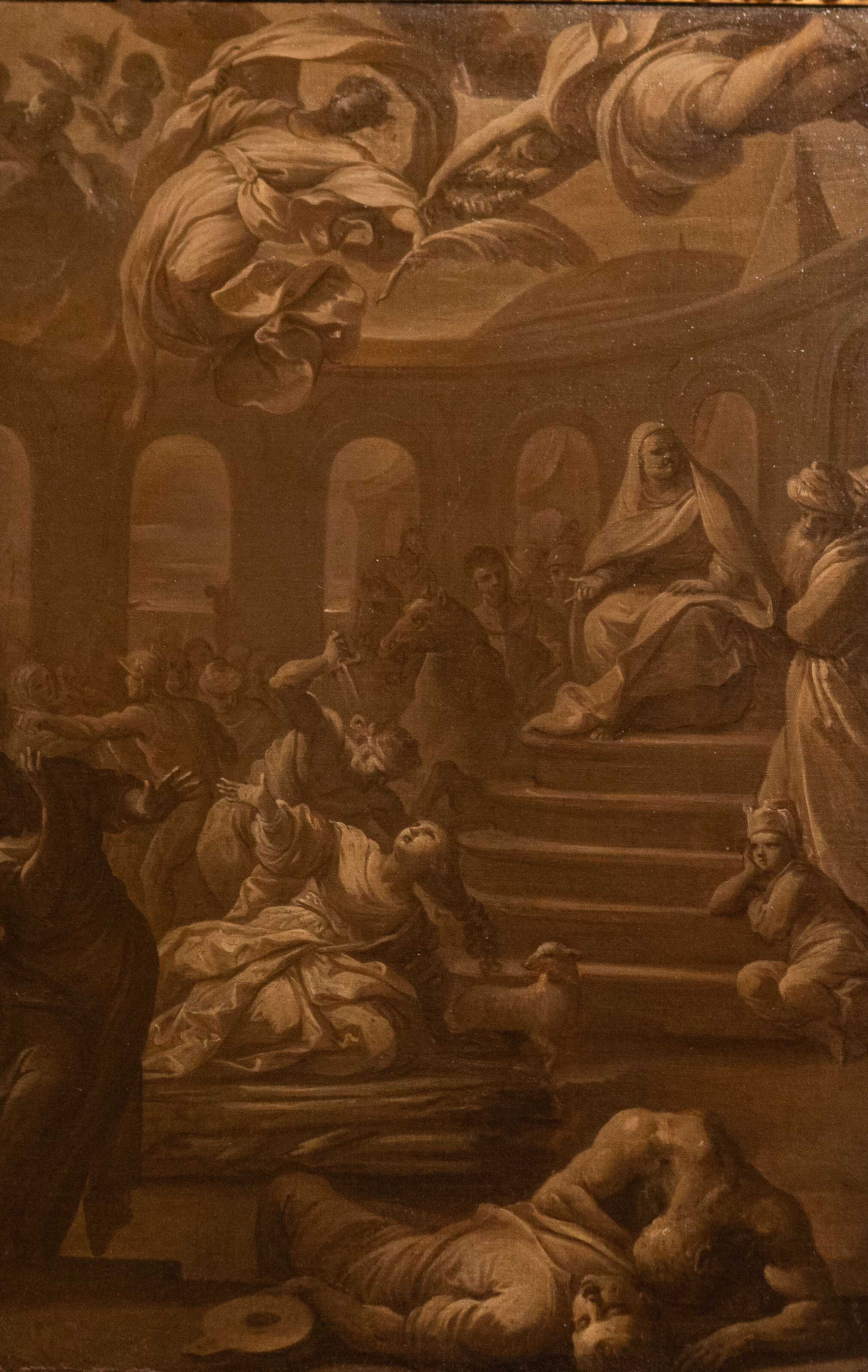

Il dipinto raffigura SantʼAgnese nellʼistante in cui sta per essere uccisa con un colpo alla gola, dopo essere miracolosamente scampata alla condanna al rogo. La martire è ancora sulla pira quando il carnefice si avventa su di lei per giustiziarla, mentre il tiranno, seduto in trono, ne decreta lʼesecuzione con un semplice gesto della mano. Attorno, una folla di spettatori assiste con espressioni di sgomento alla scena, ambientata in unʼimponente architettura di gusto classico.
Questo monocromo, eseguito su toni bruni con raffinate lumeggiature madreperlacee, rappresenta un raro esempio nella produzione di Girolamo Negri dal momento che non sono noti altri esemplari eseguiti con la stessa tecnica. Vi si riconoscono motivi ricorrenti nellʼopera dellʼartista, come il fanciullo appoggiato alla scalinata o le figure maschili con turbante, presenti anche in altri suoi dipinti. Lʼopera si colloca dopo il 1686 ed è probabilmente da intendersi come uno studio preparatorio o un esercizio autonomo.
La stessa tensione drammatica si ritrova in questa sala anche nel Caino e Abele di Giovan Girolamo Bonesi, dove la violenza è colta un attimo prima dellʼatto omicida, con unʼefficacia teatrale accentuata dal forte contrasto chiaroscurale.
_
This painting shows Saint Agnes at the dramatic moment just before her execution. After miraculously surviving a sentence to be burned at the stake, she is still standing on the pyre when the executioner moves in to strike her neck. Seated nearby, a ruler orders her death with a simple hand gesture. The scene unfolds inside a grand classical-style building, while a crowd of spectators watches in shock.
Painted in warm brown tones with soft, pearl-like highlights, this work is a rare example in Girolamo Negriʼs career. No other paintings by him are known to use this same monochrome technique.
Still, some familiar elements of his style are present—like the child leaning against the steps and the men in turbans, both of which appear in other works by the artist. The painting likely dates to after 1686 and was probably intended either as a preparatory study or as an independent expressive exercise.
A similar feeling of tension can be seen in Cain and Abel by Giovan Girolamo Bonesi, also displayed in this room. In that painting too, violence is captured just before it happens, using theatrical lighting and strong contrasts of light and shadow.